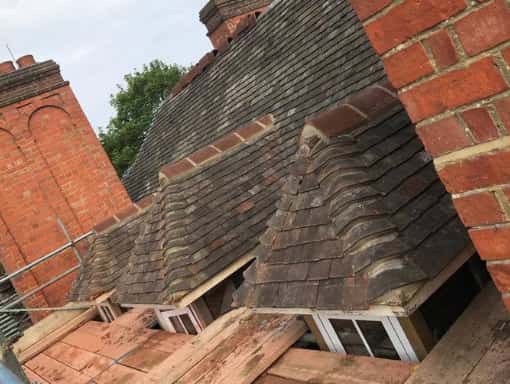
A single missing roof tile may appear to be a minor defect, but it can expose the layers beneath the roof covering to rain and wind. Whether it requires an emergency repair depends on its position, the condition of the underlay and the weather affecting the property.
For homeowners in Eastbourne, East Sussex, a missing tile should be assessed promptly. It may not always represent an immediate emergency, but delaying attention can allow a manageable defect to develop into water ingress or wider movement across the roof.
When a Missing Roof Tile May Need Urgent Attention
Roof tiles are arranged in overlapping courses that direct rainwater towards the gutter. When one is missing, this continuous covering is interrupted. The underlay may provide temporary secondary protection, but it is not intended to remain exposed for an extended period.
Urgency should therefore be based on the roof’s actual condition and the circumstances surrounding the damage.
Water Is Already Entering the Property
A missing tile requires urgent attention if water is visible inside the property. Signs may include:
- dripping from a ceiling
- a damp patch that is spreading
- staining within the roof space
- wet insulation
- moisture on roof timbers
- water appearing near electrical fittings
The internal damp patch may not be directly below the missing tile. Water can travel along underlay, battens and rafters before becoming visible elsewhere.
Heavy Rain or Strong Winds Are Expected
An exposed area becomes more vulnerable when further unsettled weather is approaching. Heavy rain can place additional pressure on the underlay, while strong winds may lift neighbouring tiles around the gap.
If the missing tile is on an exposed slope or close to the roof edge, prompt action may help prevent a larger section from becoming displaced.
A temporary weather-resistant measure may sometimes be needed before a permanent repair can be completed safely.
The Underlay Is Damaged or Deteriorated
Underlay acts as a secondary barrier beneath tiles and slates. If it remains intact, it may redirect a limited amount of moisture towards the eaves.
Older, torn or sagging underlay may not provide this protection. A missing tile above a damaged section can therefore leave the roof space directly exposed to rain.
Because the underlay is concealed, its condition cannot always be established from ground level. A professional inspection is often needed to assess the affected area properly.
Several Tiles Have Moved Together
A missing tile may be part of a wider problem. Strong winds, failed fixings or weakened battens can cause several neighbouring tiles to loosen or move out of alignment.
Warning signs include:
- gaps around nearby tiles
- uneven tile courses
- tiles rattling in windy conditions
- broken pieces in the gutter or garden
- visible movement across the roof slope
- repeated tile slippage in the same area
Where several tiles are unstable, the risk extends beyond the original opening. The surrounding section should be checked rather than simply filling the visible gap.
The Tile Is Missing Near a Vulnerable Roof Detail
The position of the damage affects its urgency. A missing tile near a chimney, valley, verge, ridge or roof junction may allow water to reach an already complex part of the roofing system.
These areas contain overlaps, flashing or changes in direction that must work together to shed rainwater. Damage close to them can be more difficult to diagnose and may require a broader repair.
Falling Materials Could Affect the Area Below
If a tile has fallen, nearby tiles or broken sections may also be loose. Areas below the roof should be kept clear until the condition has been assessed, particularly where the affected slope is above an entrance, path or driveway.
Trying to retrieve or reposition tiles using a ladder can create additional hazards. Roof access should be left to someone with suitable equipment and experience.
What Causes a Roof Tile to Go Missing?
Storms are an obvious cause, but tiles can also move during otherwise ordinary weather. Common reasons include:
- weakened or corroded fixings
- decayed timber battens
- cracks around fixing points
- gradual material deterioration
- previous poor installation
- movement within the roof
- disturbance by animals or debris
Identifying why the tile came loose helps prevent the replacement from failing in the same way.
Can One Missing Tile Be Repaired on Its Own?
In many cases, an isolated missing tile can be replaced without extensive work. This is more likely when the surrounding tiles, battens and underlay remain in sound condition.
A professional repair should involve more than inserting a visually similar tile. The replacement must have the correct profile, overlap and fixing method. Nearby materials should also be checked for damage caused when the original tile moved.
If compatible tiles are difficult to obtain or the supporting components have deteriorated, a larger local repair may be needed.
What Should You Do After Spotting a Missing Tile?
Avoid climbing onto the roof or attempting a temporary repair from a ladder. Instead:
- keep people away from the area below
- check accessible internal spaces for moisture
- move belongings away from active drips
- place a container beneath any internal water
- note when the damage or leak first appeared
- arrange a professional roof inspection
These steps can limit immediate disruption while the condition of the roof is established.
Why Prompt Assessment Matters
A small exposed area can allow repeated moisture to affect the underlay, battens, insulation and internal finishes. If neighbouring tiles are already loose, the opening may also become larger.
Prompt assessment does not mean that every missing tile requires major roofing work. It means the defect can be properly classified and repaired before avoidable deterioration develops.
Conclusion
A missing roof tile may require an emergency repair when water is entering the property, the underlay is damaged, surrounding tiles are unstable or severe weather is increasing the exposure. Where the roof remains dry and the damage is isolated, a prompt scheduled repair may be sufficient.
The position of the missing tile and the condition beneath it are more important than the number of tiles involved. If you have noticed a missing or displaced tile at your property in Eastbourne, East Sussex, Eastbourne Roofing Solutions can assess the affected area and recommend an appropriate repair. Contact the team to arrange a professional inspection.
Call us on: 01323 402992
Click here to find out more about Eastbourne Roofing Solutions
Click here to complete our contact form and see how we can help with your roofing needs.